How I turned a funding-critical concept into a multi-sided IVF support product using rapid product strategy, clinical insight, and a 24-hour delivery model.
Client details are private under an NDA.
45Days to Delivery
200+Prototype Screens
1Secured Project Funding
Introduction / Purpose
Led product strategy and UX direction for a high-fidelity proof of concept designed to support the emotional, educational, and operational realities of the IVF journey.
The Problem / Opportunity
Women in early IVF stages faced confusion, stress, and information gaps. The business needed a credible proof of concept in 45 days to support the next stage of funding.
Solution
Built a 24-hour delivery model, reframed the concept around a connected Patient-Partner-Clinician ecosystem, and delivered a design-system-backed prototype with 200+ screens.
The product was shaped through clinical context, workshop synthesis, remote collaboration, and rapid product alignment.
The Situation
A biotech company identified a gap in IVF support. Women in early treatment stages were managing confusion, stress, isolation, and information gaps, while most available solutions focused narrowly on medication or clinical logistics.
The client needed a funding-ready proof of concept in 45 days. A simple patient-facing reminder app would not be strong enough. The product needed to show a credible support ecosystem, fit clinic workflows, and communicate a clearer value proposition.
That created the central challenge: define the right product thesis, design the right experience architecture, and deliver a believable high-fidelity prototype within a fixed timeline.
The Journey: From Tight Deadline to Stronger Product Thesis
“The product shifted from a patient utility into a connected support ecosystem for the patient, partner, and clinician.”
Phase 1
Defining the Product Thesis Fast
We started with stakeholder and clinic workshops to align on business goals, clinical realities, success criteria, and the delivery model. This established the product thesis: support the IVF journey, not just the treatment schedule.
Phase 2
Prioritizing the Highest-Value Flows
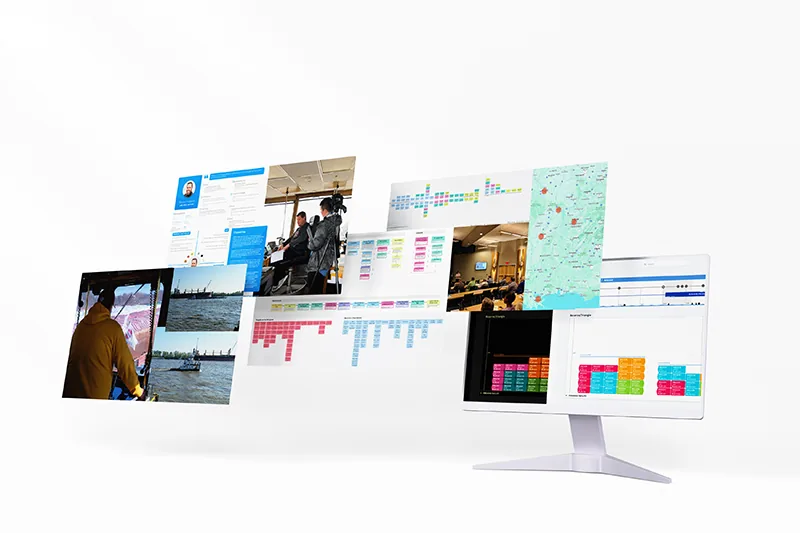
Given the timeline, we used rapid research methods, proto-personas, empathy mapping, functional decomposition, and information architecture work to identify the highest-value flows. Medication scheduling, education, question reduction, and emotional clarity became the foundation of the experience.
Phase 3
Expanding the Product Beyond the Patient
Early findings showed that a patient-only experience limited the product’s value. I pushed to expand the scope into three connected personas: Patient, Partner, and Clinician. That decision strengthened the product concept, the support model, and the funding story.
Phase 4
Executing in Parallel Without Losing Coherence
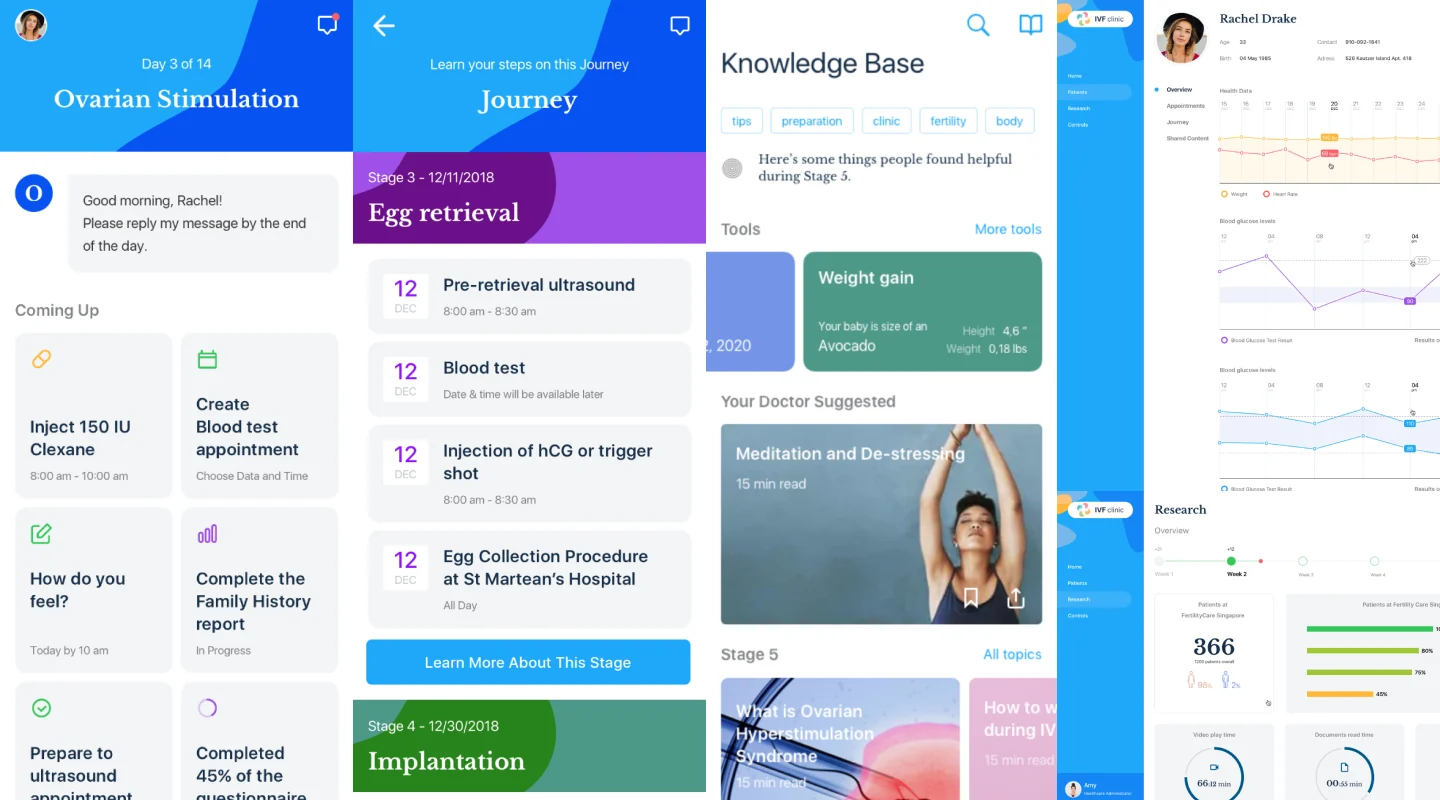
We ran research, architecture, interaction design, visual design, and design system work in parallel through a 24-hour follow-the-sun model. The team delivered more than 200 high-fidelity screens across three personas within the 45-day window.
Leadership Through Uncertainty
This project required two forms of leadership at the same time: operational leadership to make the timeline workable, and product leadership to make the concept strong enough to support funding.
1. Designing the Delivery Model Around the Timeline
The 45-day deadline ruled out a standard sequence of discovery, design, and refinement. I designed a 24-hour operating model across distributed teams, with daily syncs, structured handoffs, and parallel workstreams so the work could continue across time zones without losing direction.
2. Strengthening the Product Thesis
The simpler path was to design a patient reminder app. The stronger product direction was a connected support ecosystem. Discovery showed that partner support and clinician visibility were part of the real value proposition, so I pushed to include them in the proof of concept.
That decision made the prototype more credible. It showed a product vision that supported the patient while acknowledging the broader care and support system around her.
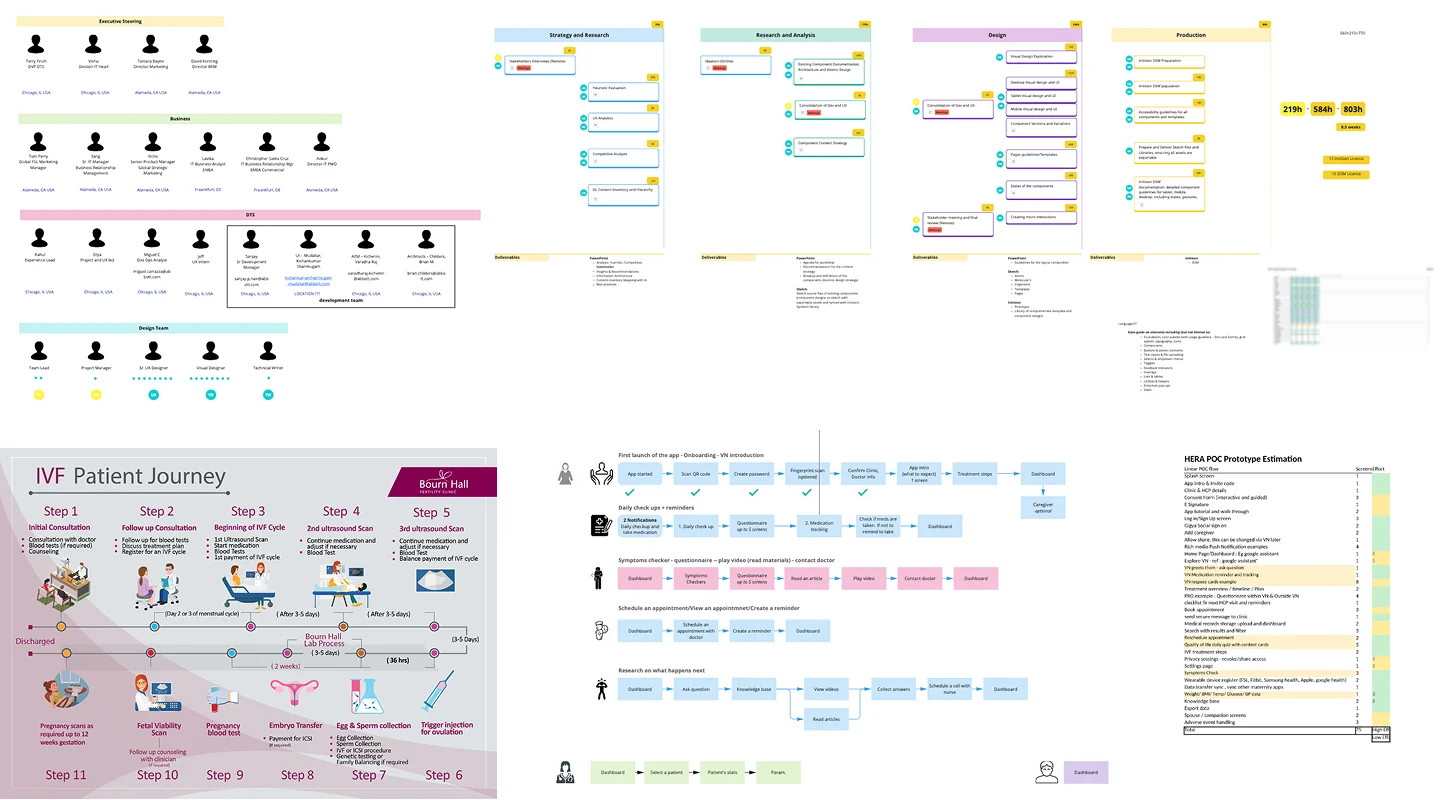
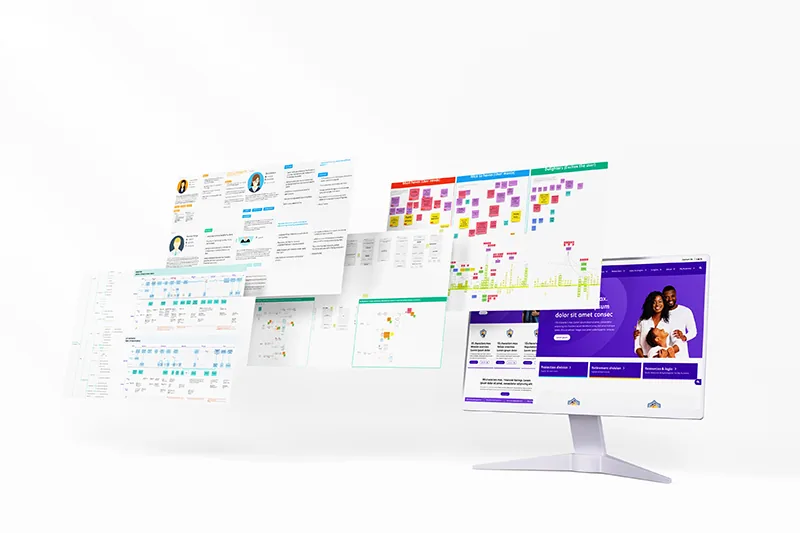
Product architecture came from concrete artifacts: IVF journey mapping, phased planning, and rapid prioritization of patient and clinic needs.
Designing for a Complex Ecosystem
The experience was designed around one central insight: IVF is not a single-user workflow. It is a support system involving the patient, the partner, and the clinic.
The product had to reduce uncertainty for the patient, make support more actionable for the partner, and provide clinicians with useful visibility without adding unnecessary administrative burden.
Four experience principles guided the product:
Help the patient feel more informed and in control.
Reduce repeated questions through education, reminders, and clearer next steps.
Give the partner timely ways to support the patient.
Give clinicians a lightweight view of patient progress and key milestones.
Key User Needs & Platform Solutions
Role
Core Job (JTBD)
Key Platform Workflow
Patient (Primary)
Move through treatment with more clarity, less stress, and fewer missed steps.
Personalized schedules, medication reminders, symptom check-ins, educational content, and guided next steps.
Partner
Understand what is happening and know how to provide timely, useful support.
Shared milestones, support prompts, relevant education, and visibility into key moments without overwhelming the patient experience.
Clinician
Stay informed about patient progress and risk signals without increasing manual follow-up.
Lightweight dashboard for patient status, questionnaire data, and milestones that supports proactive care while keeping clinic workload realistic.
Building a High-Performing, Integrated Team
The team delivered at speed because the operating model protected product quality, not just output volume.
A 24-Hour Product Engine
The distributed structure allowed work to continue across time zones. It kept discovery, product decisions, and execution moving without waiting for one location to finish before another could begin.
Parallel Tracks with One Strategic Thread
Strategy, information architecture, interaction design, visual design, and design system work ran in parallel. Priorities, reviews, and handoffs kept the work aligned around one product story.
Hands-On Product and Design Direction
I stayed close to the work by shaping scope, reviewing flows, making trade-offs, aligning clinic and business stakeholders, and ensuring the prototype communicated a coherent product vision.
The final proof of concept connected patient support flows with partner and clinician visibility, making the ecosystem feel like a credible product direction.
Before
A narrow patient-facing concept under a 45-day funding deadline.
After
A multi-sided IVF support ecosystem connecting Patient, Partner, and Clinician experiences through a high-fidelity proof of concept.
The Outcome
The team delivered a high-fidelity proof of concept with 200+ screens, a supporting design system, and a clearer product narrative within 45 days.
The concept matured from a narrow patient utility into a broader IVF support ecosystem with stronger clinical and business logic. The prototype helped the client secure the next stage of funding.
The broader lesson was strategic. Rapid delivery did not have to come at the expense of product thinking. With the right operating model, a compressed timeline could still produce a sharper product vision, stronger experience architecture, and a credible path forward.
45 days to delivery for a funding-ready proof of concept.
200+ prototype screens across Patient, Partner, and Clinician experiences.
1 secured project funding outcome supported by a clearer product narrative.