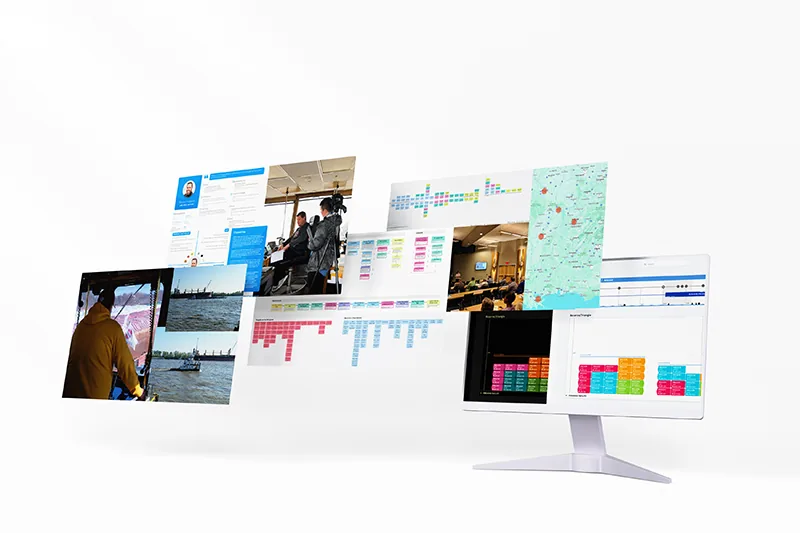
How a research-led design partnership helped unify 11 legacy maritime systems into a single fleet operations platform.
Client details are private under an NDA.
35%Faster Critical Workflows
21%Decrease in Communication-Related Errors
11Legacy Systems Reframed into One Platform
Context
The nation’s largest barge operator relied on 11 disconnected legacy systems to run critical logistics. Dispatchers, captains, repair teams, and business units had to chase status across spreadsheets, email, phone calls, and duplicate data entry.
Role
I led product strategy and UX as the design/product partner embedded with the client’s engineering and operations teams. My role included reframing the original brief, leading field research, defining the platform model, and aligning stakeholders around a unified direction.
Approach
We shifted the work from system integration to product redesign. A 101-day research effort helped define a unified Fleet Picture with role-based workflows, offline support, low-light usage patterns, and a clearer operating model for crews.
“The project shifted from connecting 11 systems to giving crews one shared operating picture.”
Project Overview
Framework
Duration: 9 months Team Structure: Vendor design/product team embedded with the client’s in-house engineering and operations teams.
Leadership Focus
Product Strategy
Field Research
Workflow Simplification
Executive Alignment
Team Integration
Personally owned: product strategy, research planning, stakeholder alignment, persona prioritization, platform workflow model, design direction, and executive communication.
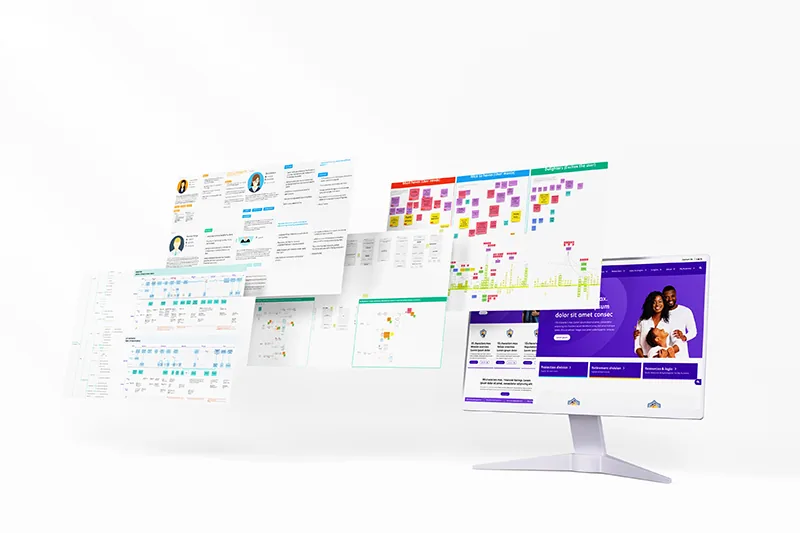
Research to delivery: field work, journey mapping, and platform screens that supported the unified fleet operations direction.
The Situation
The client’s original request was to connect 11 legacy systems into a single technical solution.
During early discovery, it became clear that the challenge was broader than system integration. Dispatchers, captains, repair teams, and business units were working from different sources of truth. Critical information moved through spreadsheets, email, phone calls, and duplicate data entry.
This created three operational challenges:
Slower workflows during time-sensitive fleet decisions.
Communication errors between dispatch, vessel crews, and support teams.
Increased safety and operational risk due to fragmented information.
The project needed more than a technical bridge. It needed a shared operating picture grounded in how the work actually happened.
That insight became the turning point. The engagement shifted from connecting systems to designing a unified platform that supported real operational decisions.
The Journey: From Integration Request to Product Strategy
Phase 1
Reframing the Brief
The project began as a technical integration effort. I presented the risks of moving forward without understanding the operational context. The team approved a research-first approach focused on how fleet work was actually coordinated across roles, locations, and systems.
Phase 2
Building Trust Through Field Research
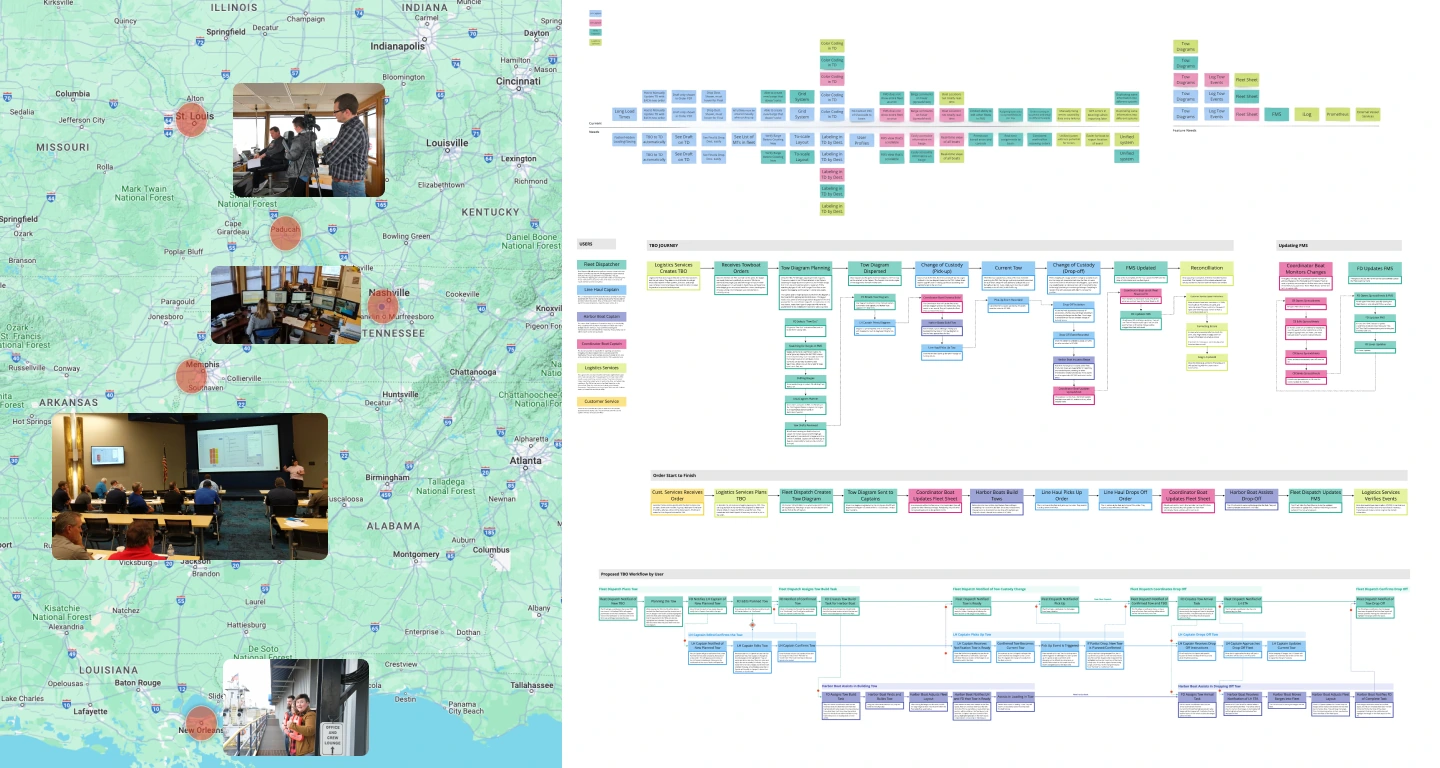
We ran a 101-day research effort that included contextual inquiry, ethnographic fieldwork, journey mapping, and day-in-the-life analysis. This exposed fragmented handoffs, silent workarounds, and role-specific information gaps that did not surface in stakeholder meetings.
Phase 3
Identifying the Primary Persona
Research across 11 roles revealed one key anchor: the Linehaul Captain. By solving first for the person who needed the clearest real-time view of tow composition, readiness, and constraints, we simplified decisions for adjacent roles and reduced role involvement by up to 70% in key workflows.
Phase 4
Defining the Fleet Picture
The platform direction centered on a unified “Fleet Picture”: a shared operational view that helped teams check fleet status, validate tow composition, plan scenarios, and keep work moving when connectivity or communication was limited.
Leadership Through Uncertainty
This project required leadership on two fronts: building trust with skeptical users and securing support for the research needed to avoid another failed modernization effort.
Earning Trust with Vessel Crews
The crews were skeptical for valid reasons. Previous modernization projects had not meaningfully improved their work. One operator summarized the concern clearly:
“IT comes here, takes notes, and nothing ever changes.”
We treated that skepticism as an important design constraint. The fieldwork had to be visible, practical, and tied to problems crews recognized immediately.
We spent time observing day and night shifts, listened for repeated friction, and focused the platform direction on the most consistent operational needs.
The commitment was intentionally narrow:
“We can’t fix everything. But the top three problems you all mentioned? We will fix those.”
That helped move the research from observation to partnership. Crews became more open, more specific, and more invested in the direction of the platform.
Securing Support for Research
Leadership initially saw field research as an added cost and schedule risk.
I reframed the research as a risk-reduction step. A prior modernization effort had already shown the cost of building around assumptions. The field research gave the team a way to avoid repeating that pattern.
This shifted the conversation from research as delay to research as protection against building the wrong solution.
Field immersion across multiple operating contexts, mapped into role workflows and product decisions for the unified Fleet Picture.
Designing for a Complex Operating Environment
The platform could not be a generic dashboard. Maritime logistics work is time-sensitive, role-specific, and dependent on operational context.
The design needed to answer a practical question for each role:
What does this person need to know, decide, update, or confirm to keep the fleet moving safely?
Research identified the Linehaul Captain as the primary persona. Designing around that role helped structure the platform around real decisions instead of internal system boundaries.
Key User Needs & Platform Workflows
Role
Core Job
Platform Workflow
Linehaul Captain (Primary)
Build, verify, and confirm the tow composition for safe transit.
Check barge characteristics, monitor build progress, confirm tow readiness, and maintain confidence when connectivity is limited.
Dispatch Operator
Maintain an accurate real-time fleet state.
Create and update the tow builds quickly while reducing the need to reconcile spreadsheets and radio updates.
Coordinator Tug Captain
Plan shifts and deconflict service crews.
Create what-if fleet scenarios without altering live operational data.
Billing Manager
Invoice accurately for all billable events.
Export billable events and reduce manual reconciliation.
Repair Technician
Verify access windows before sending a crew.
Find a target barge and confirm service windows before dispatching repair teams.
Building an Integrated Product Team
The project required close collaboration between our design/product team and the client’s engineering and operations teams.
Integrated Team Model
Our team led design, research, and product strategy while working as an extension of the client’s internal team. This helped keep product decisions connected to operational needs and technical constraints.
Shared Decision Rhythm
A weekly leadership sync helped the team resolve trade-offs, align on priorities, and keep research findings connected to platform decisions.
Operational Governance
The platform required clear rules around role-based write access, data integrity, and offline capability. These decisions were essential to building trust in the system and supporting safe operations.
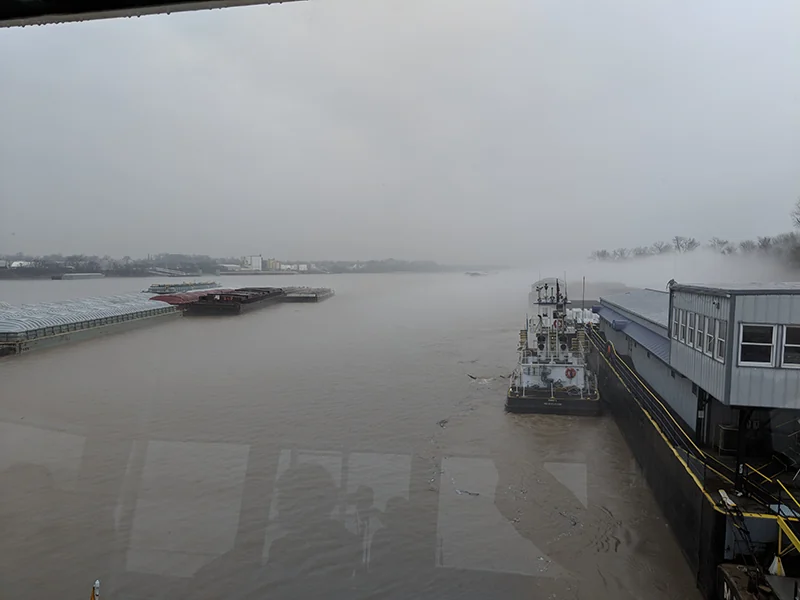
Operational context from the field: the platform direction had to reflect the real conditions of river logistics.
Before
11 fragmented systems, manual updates, spreadsheets, emails, and radio calls.
After
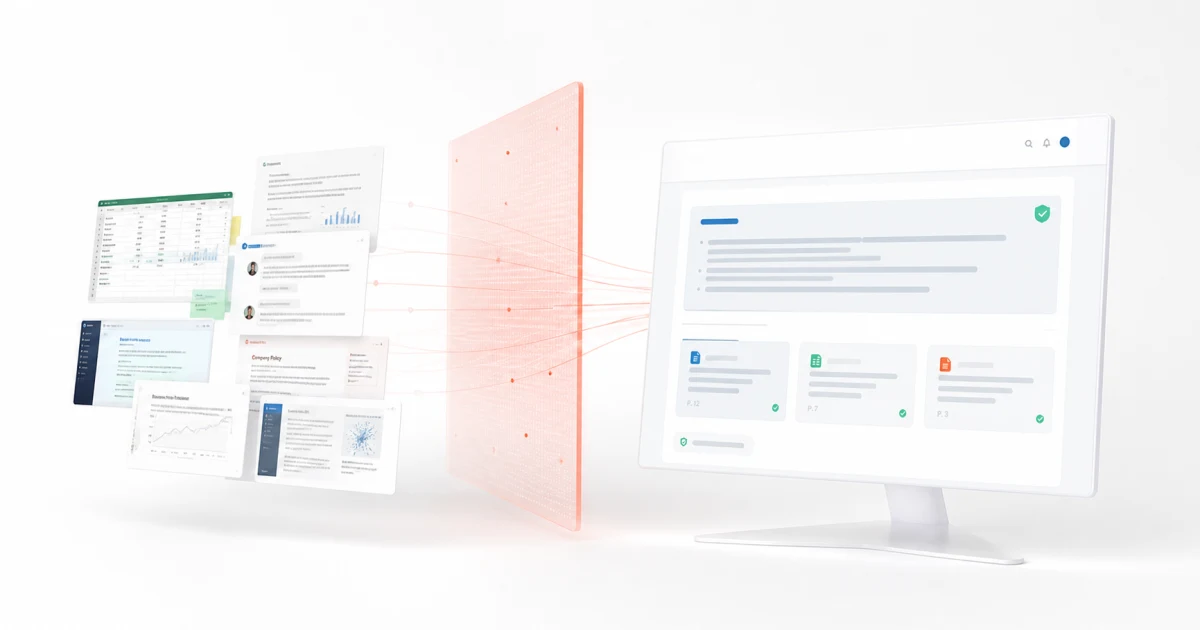
One shared Fleet Picture organized around role-based workflows and operational decisions.
The Outcome
The team delivered a unified fleet operations platform direction grounded in field research and real operational workflows.
The impact was measurable:
35% faster critical workflows by reducing steps in key fleet tasks.
21% decrease in communication-related errors by replacing fragmented updates with a clearer shared operating picture.
11 legacy systems reframed into one platform through a product strategy grounded in how crews actually worked.
The broader impact was organizational. The project changed how the company approached modernization. Instead of starting with systems and asking people to adapt, the team adopted a research-led process focused on how work actually happens.
The project did more than define a platform. It established a more effective way to modernize complex legacy operations: start with the work, identify the real decision points, and design the system around the people responsible for keeping the business moving.