De-Risking Project Delivery Through Team Capability
How I turned years of manual team-staffing work into a research-backed 0→1 product that helps leaders expose capability gaps, build stronger project teams with AI decision support, and address execution risk before delivery begins.
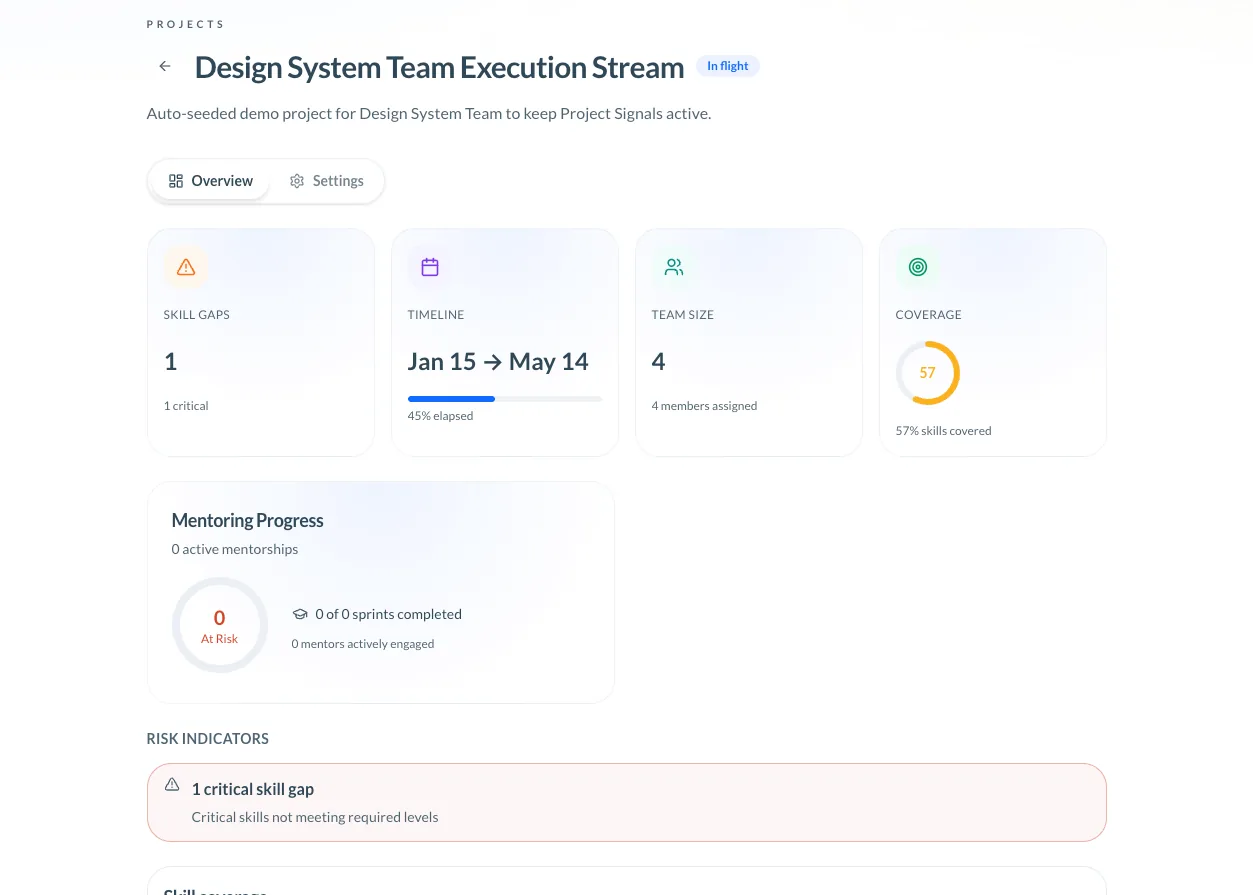
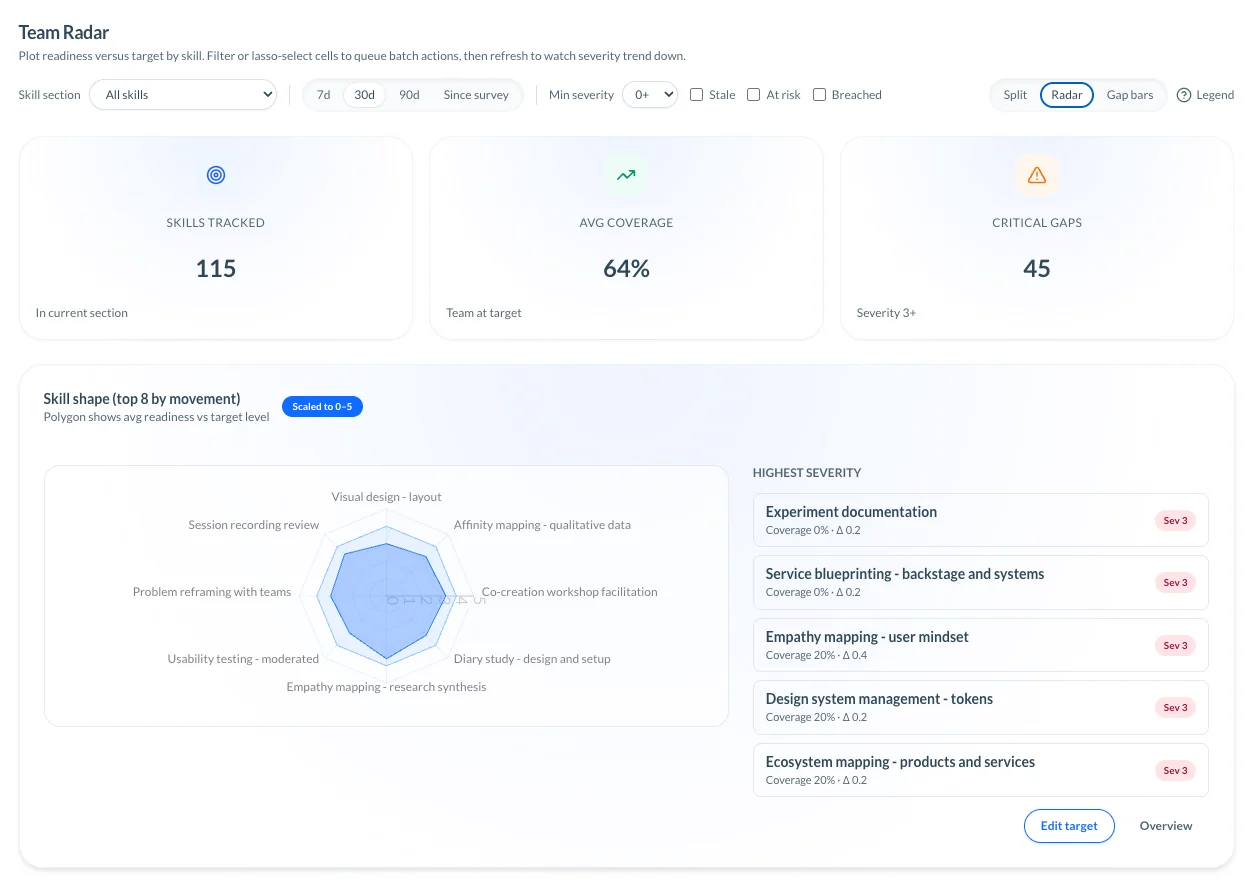
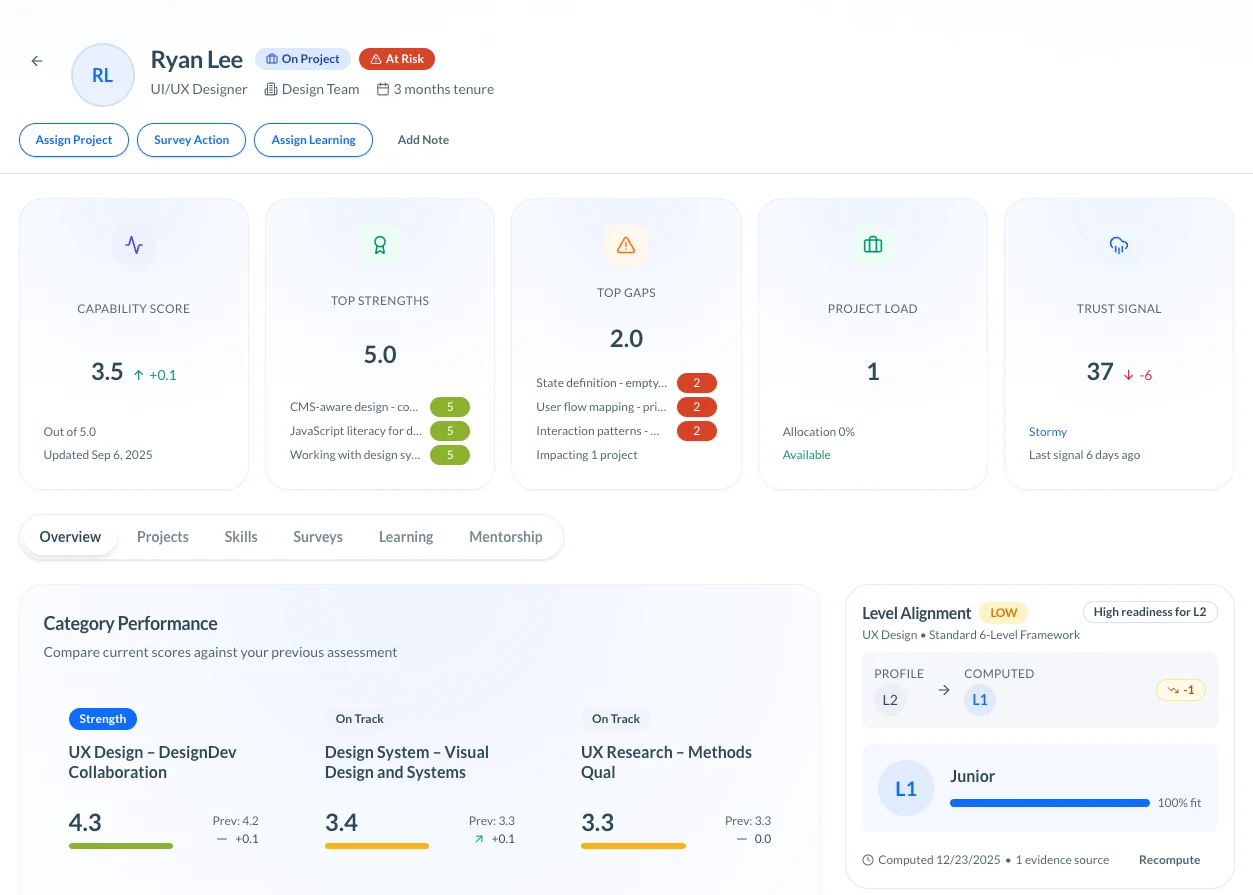
Atlas demo data. From capability evidence to project staffing and intervention. Member 360 is the member’s self-view.
Overview
Leaders commit to projects without knowing whether the team can deliver. Capability stays fragmented until gaps appear mid-execution.
Principal Product Designer and Product Strategist — from operational problem through research, architecture, validation, and working product.
Recorded 100+ research and validation touchpoints, tested with a real team, shipped an MVP in under 90 days, and gained beta-pilot commitments from three organizations.
Skills demonstrated
My design process
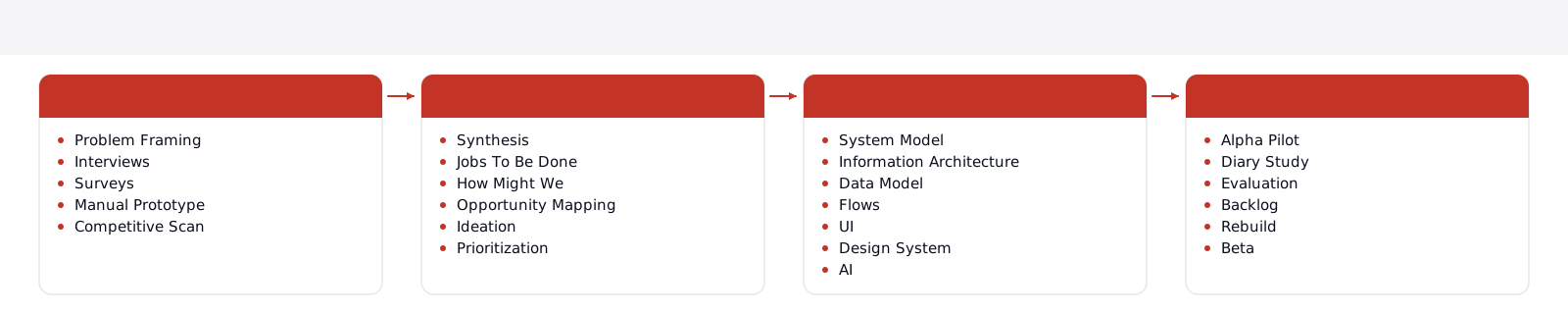
Problem
I couldn't answer a basic staffing question
The idea did not begin with software. Leading distributed teams, I repeatedly faced a project that needed a specific capability — and could not answer:
Who in this organization actually knows how to do this?
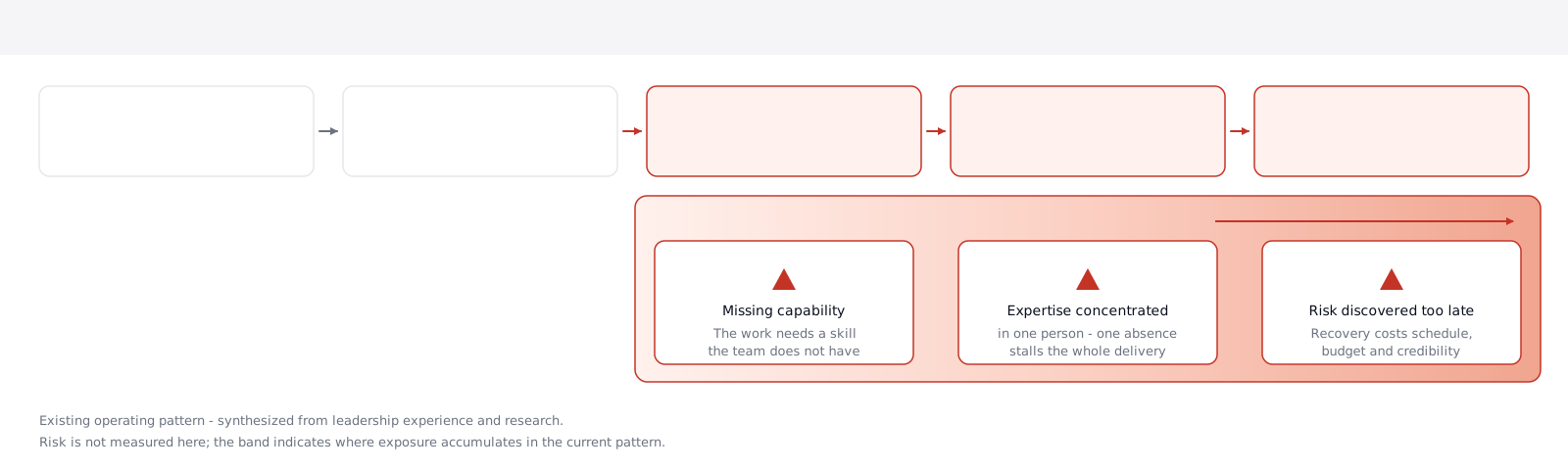
Knowing another department had seven designers did not tell me which one had the expertise. The workaround was manual: forms, manager outreach, spreadsheet analysis. It worked. It did not scale.
The current-state workflow
The problem wasn't measuring skills. It was reducing execution risk.
The design challenge
Could team capability become an early signal for project risk — before the organization commits to the work?
That shifted the north star from a better skills assessment to helping managers assemble capable teams — and act when capability is missing.
Research — Assess
Research
I tested the operating model before designing the product
Experience generates a hypothesis. It is not evidence. Before software, I needed to know whether capability information actually improved decisions.
Research questions
-
How do leaders currently understand what their teams can actually do?
-
How do they decide who belongs on a project?
-
When do capability gaps become visible?
-
What do managers do once a gap is identified?
-
How do development, mentoring, staffing, and planning connect — or fail to?
Methods
Interviews
Capability, levels, growth, staffing, and development.
Capability surveys
Structured data comparable across people and teams.
Manual prototype
Forms and spreadsheets tested decision value.
Alpha pilot
Early versions used on real project work.
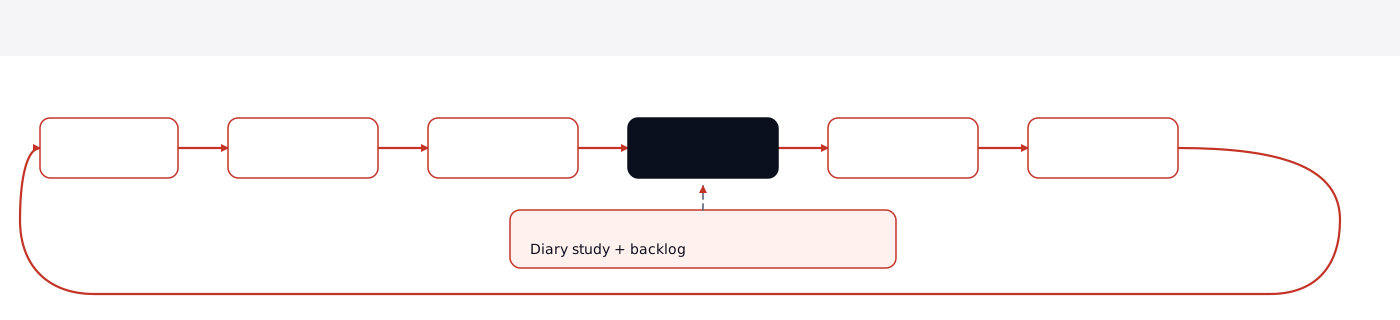
Diary study
What worked / what didn't after real use.
Competitive scan
Skills, L&D, mentoring, talent marketplaces, team health.
100+ aggregate research and validation touchpoints across interviews, assessments, pilots, and validation activities — not 100+ unique professionals or formal qualitative interviews. The landscape had many point solutions; the missing connection was between capability, work, intervention, and delivery risk.
The manual prototype
Software was not the innovation. The operating model was.
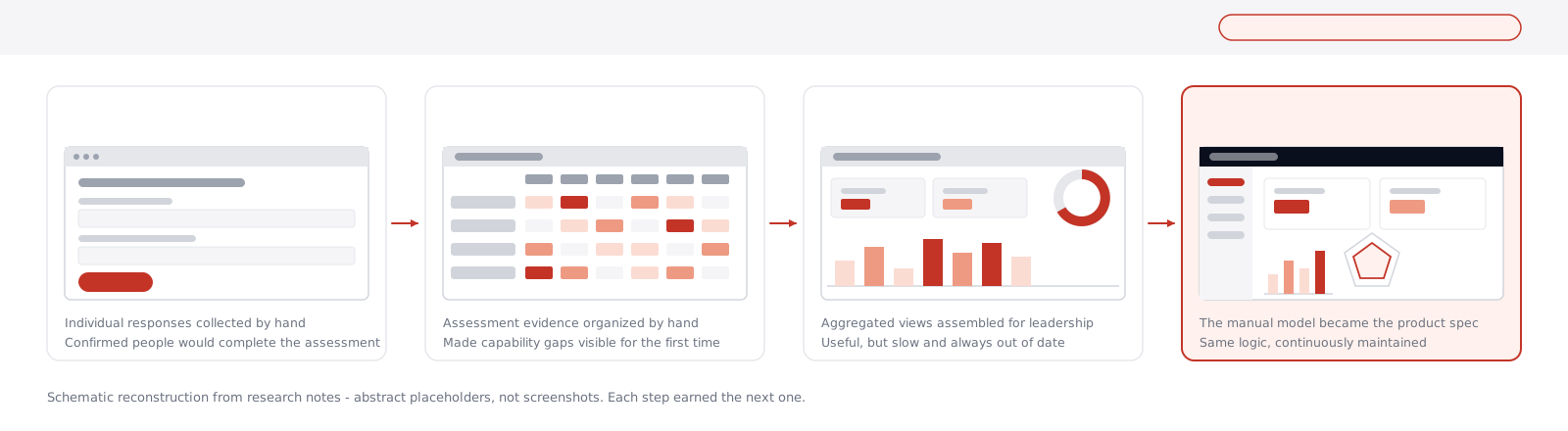
One alpha pilot
Directional evidence from one early alpha pilot — not universal performance data. Team-level signals exposed patterns individual conversations missed.
Synthesized needs
I need to understand how this compares with expectations at their actual level.
Knowing the gap is useful, but I need to know who can help.
The team view is more useful to me than another individual score.
Synthesis of manager and participant feedback across the alpha pilot and diary responses — not verbatim quotations.
Define — Align
Define
Research changed the product
The original concept — make team skills visible — did not survive research. Good.
Skills visibility was the primary problem.
Managers could see a gap and still have no way to close it.
Every meaningful gap connects to an intervention.
Individual scores would center the experience.
Managers needed coverage, concentration, and readiness — not rankings.
Team patterns and project readiness became the management view.
Capability could be evaluated independently.
A score is meaningless without work context.
Project requirements became part of the capability model.
Jobs to be done
| Role | Situation | Job | Decision enabled |
|---|---|---|---|
| Manager (primary) | Committing to a project | Understand whether the team can deliver it | Close gaps before execution risk |
| Team member | Expectations change | See strengths and what to develop next | Growth tied to real work |
| Company / People admin | Data spans multiple teams | Keep a consistent, adaptable framework | Org-wide use without flattening context |
| Org leadership | Planning future work | See systemic capability and concentration risk | Invest where delivery is threatened |
Do we have the team capability required to deliver what we are about to promise?
Key research insights
01 — Context or weak data
A self-rating of “4” does not say whether capability is enough for the project ahead.
02 — Visibility needs action
A heatmap is interesting for five minutes. Then someone asks: what do we do now?
03 — Patterns over rankings
Where are we exposed? Which skills have one expert? Not: who is number one?
04 — Development tied to work
Growth becomes meaningful when mentoring attaches to the work that needs the skill.
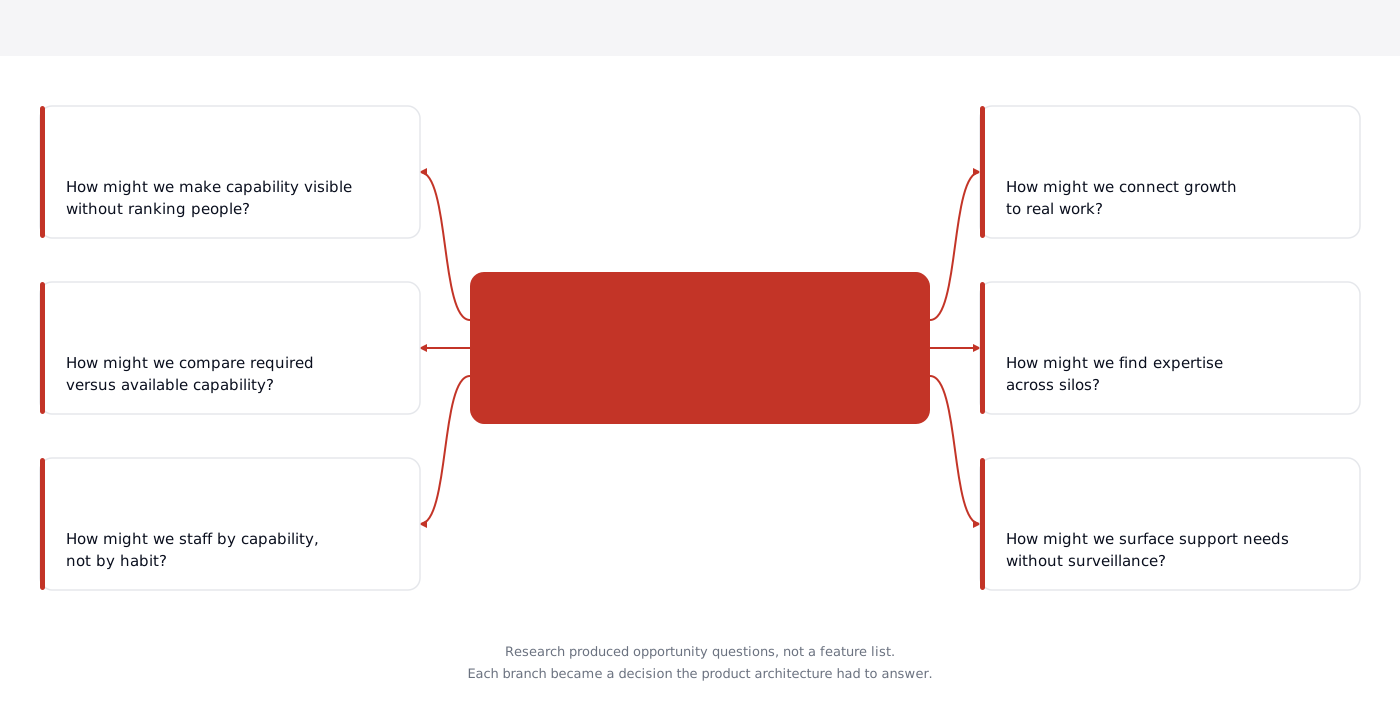
How might we…
Ideation
Design — Implement
Design
Design principles
01 — Don't rank people
Build stronger teams — not leaderboards.
02 — Capability is contextual
Meaningful only relative to level, role, team, or work.
03 — Signal → action path
If the system flags a risk, make the next action clear.
04 — AI recommends
Managers review and approve consequential staffing decisions.
05 — Design the system
Assessments, levels, projects, mentoring share one model.
06 — Protect trust
Behavioral data must never become covert surveillance.
Operating model
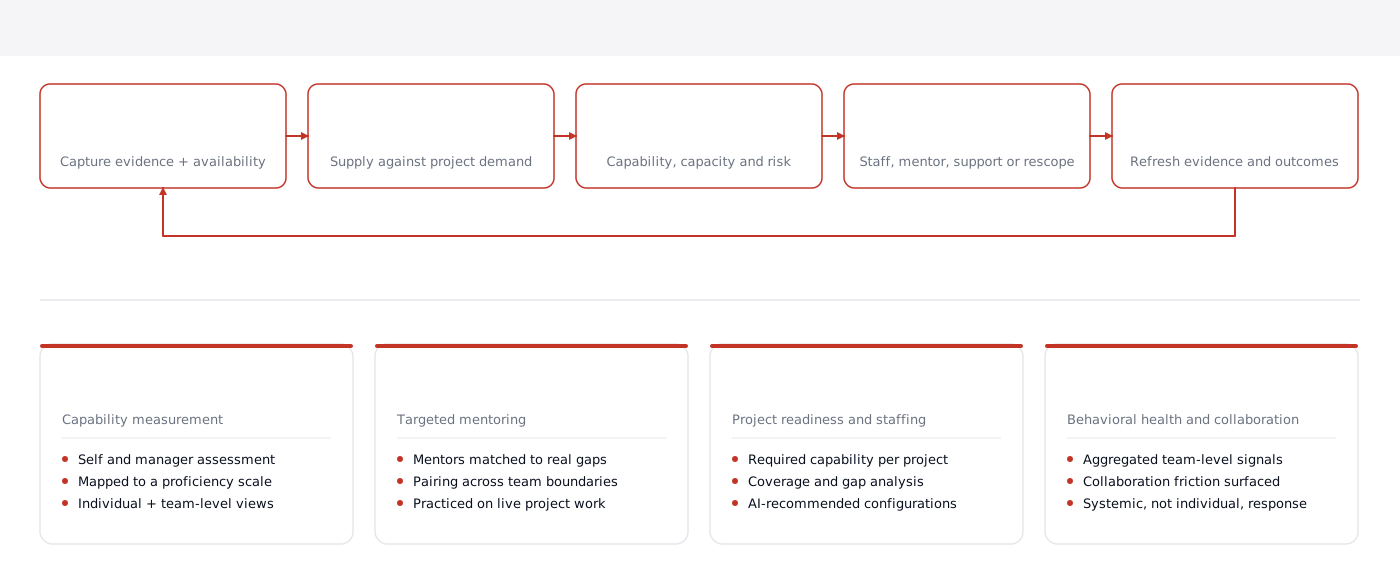
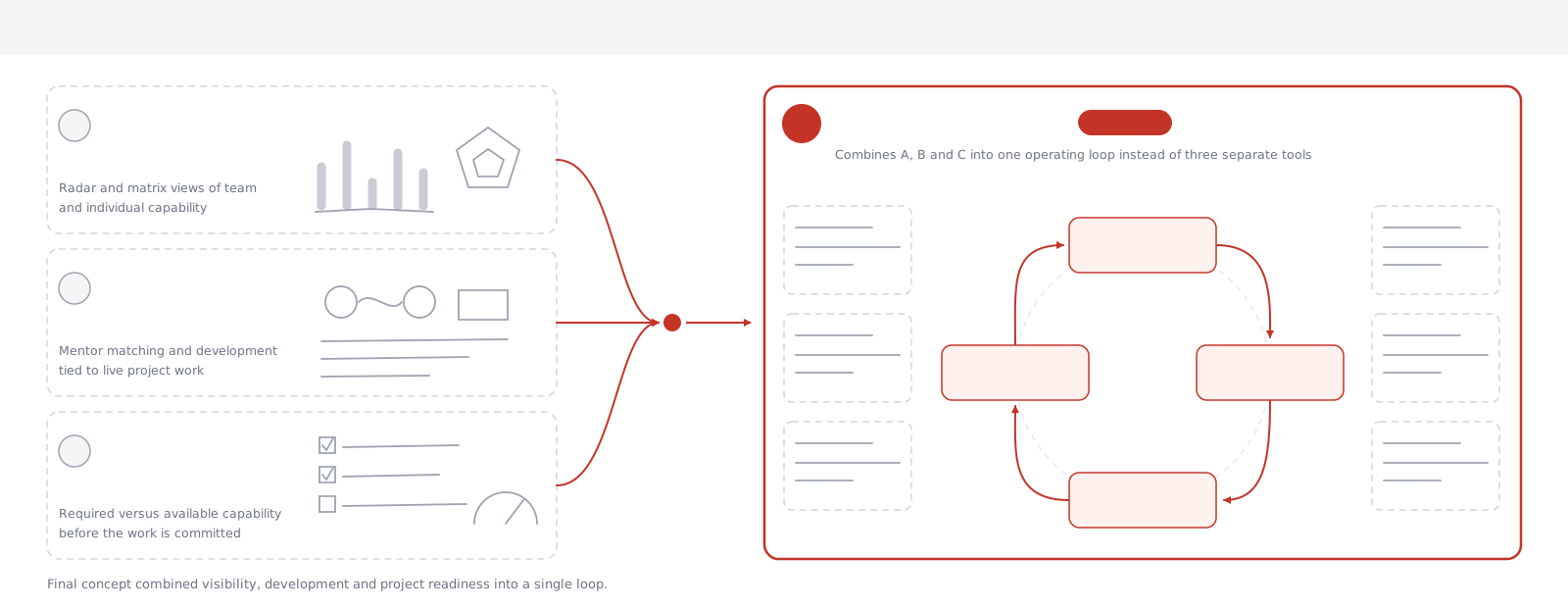
Shared capability architecture
I designed one shared capability model rather than separate systems for assessment, staffing, mentoring, and development. A shared skill taxonomy and proficiency scale connect evidenced capability with project requirements. Career-level expectations remain a separate development context; they do not define project demand.
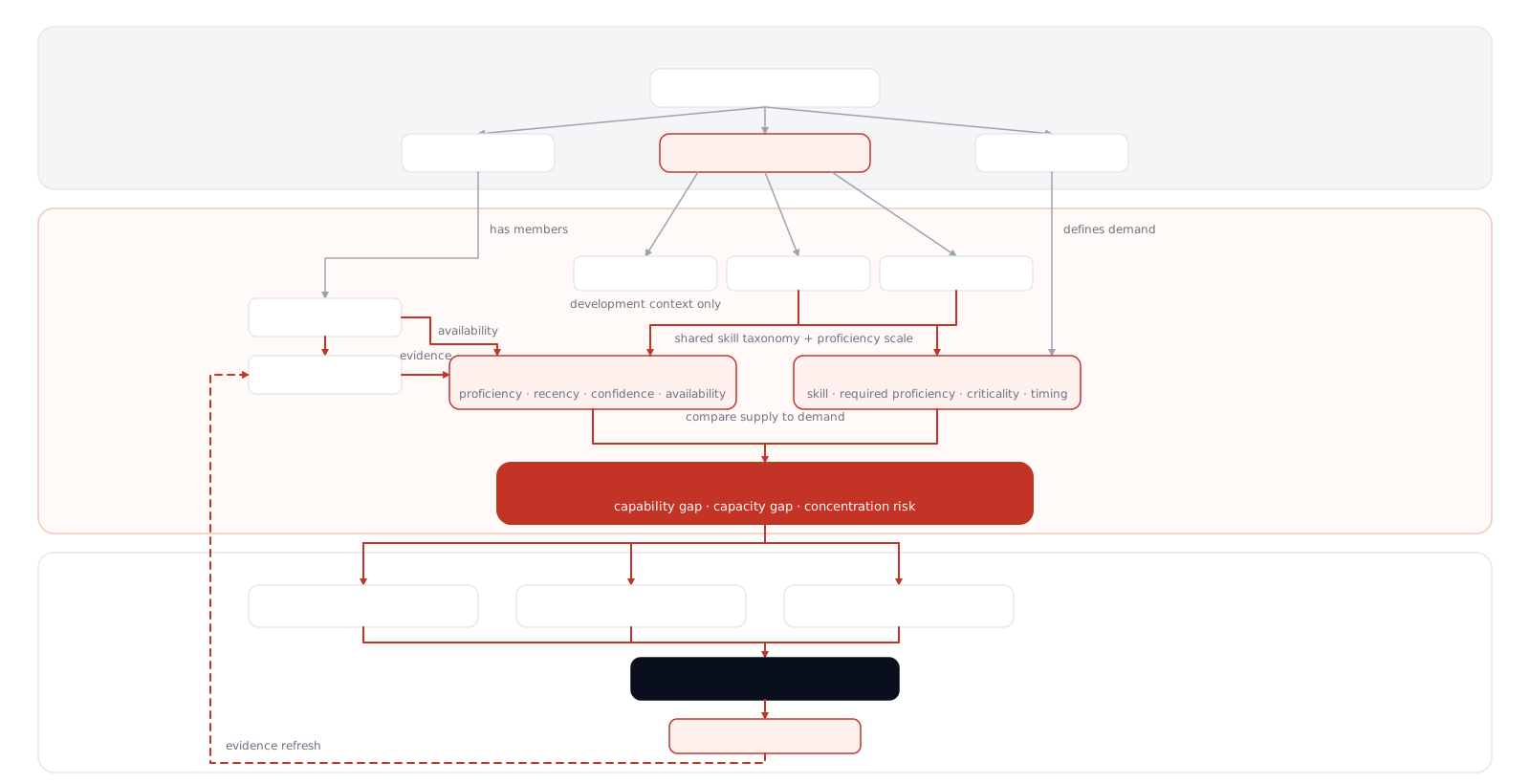
Assessments create evidence; projects create demand; availability determines capacity. TCE compares all three to distinguish capability gaps, capacity gaps, concentration risk, and evidence confidence.
How capability gets meaning
A capability score has little meaning in isolation. TCE interprets development evidence in context: the discipline, career-level expectation, skill, and common proficiency scale. Comparing an evidenced proficiency with a career expectation identifies a strength or growth area; project readiness is a separate comparison against project requirements and availability.
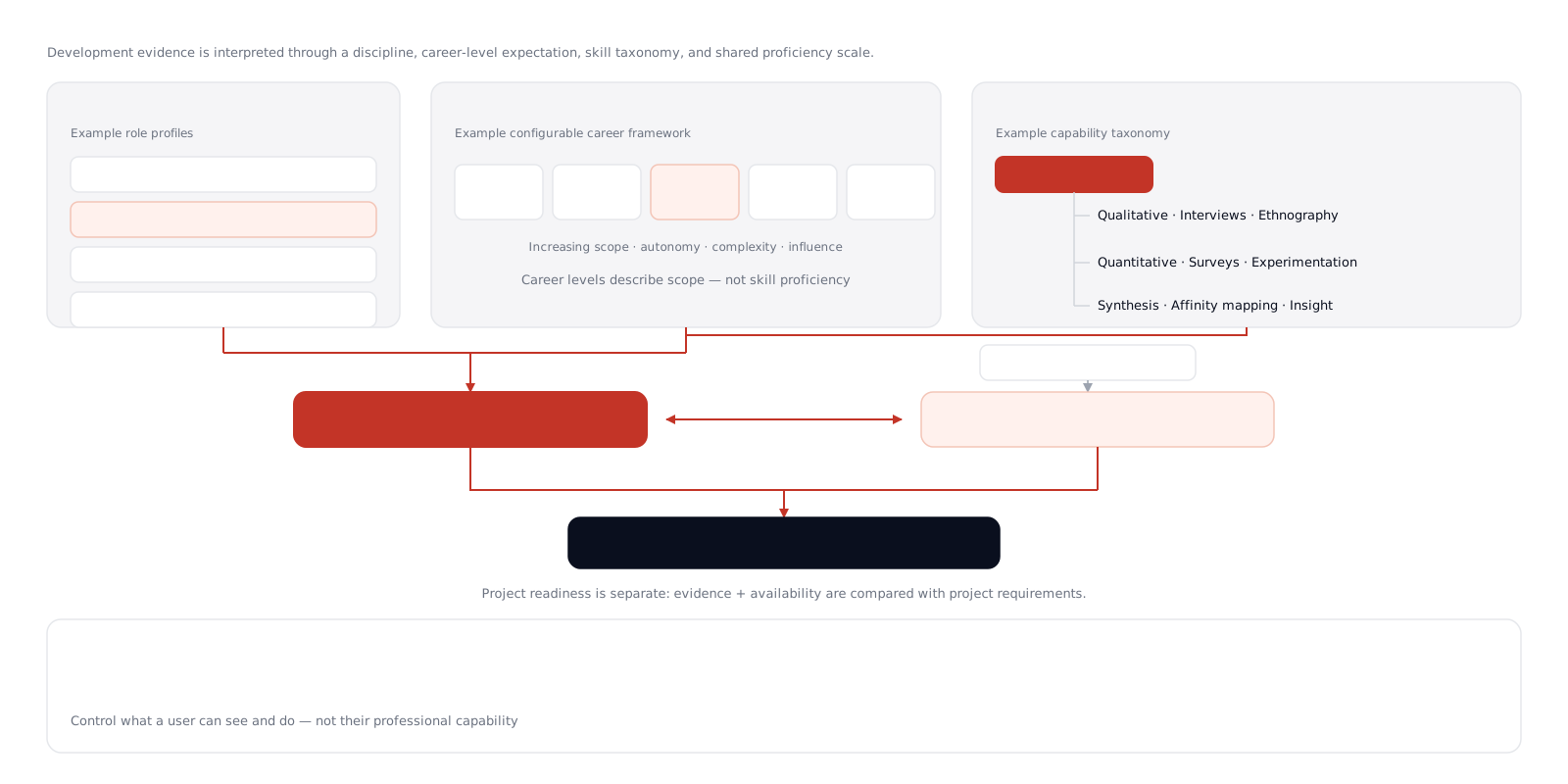
Product roles such as Team Member, Manager, Organization Admin, and Platform Admin control access to information and actions. They are intentionally separate from professional capability and career level.
Key user flows
Flow 01 — Understand team capability
- Configure framework
- Complete assessment
- Map evidence to skill + proficiency
- See patterns → decide
Aggregate patterns before raw scores.
Flow 02 — Build a project team with AI
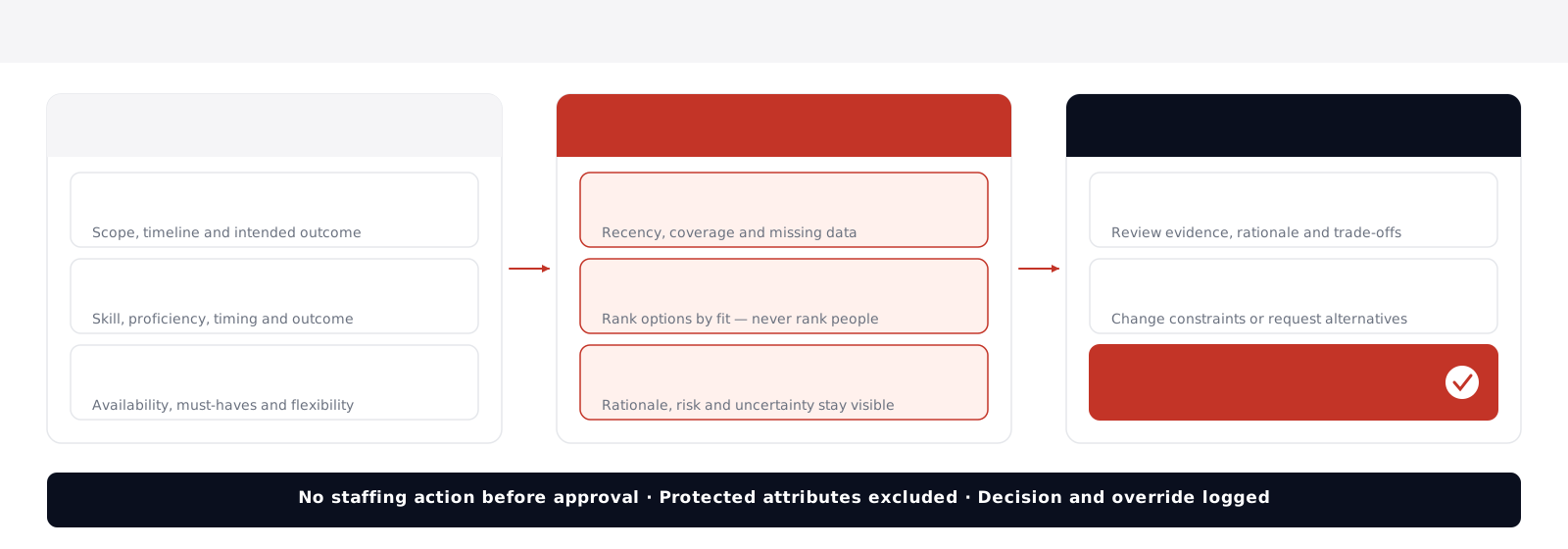
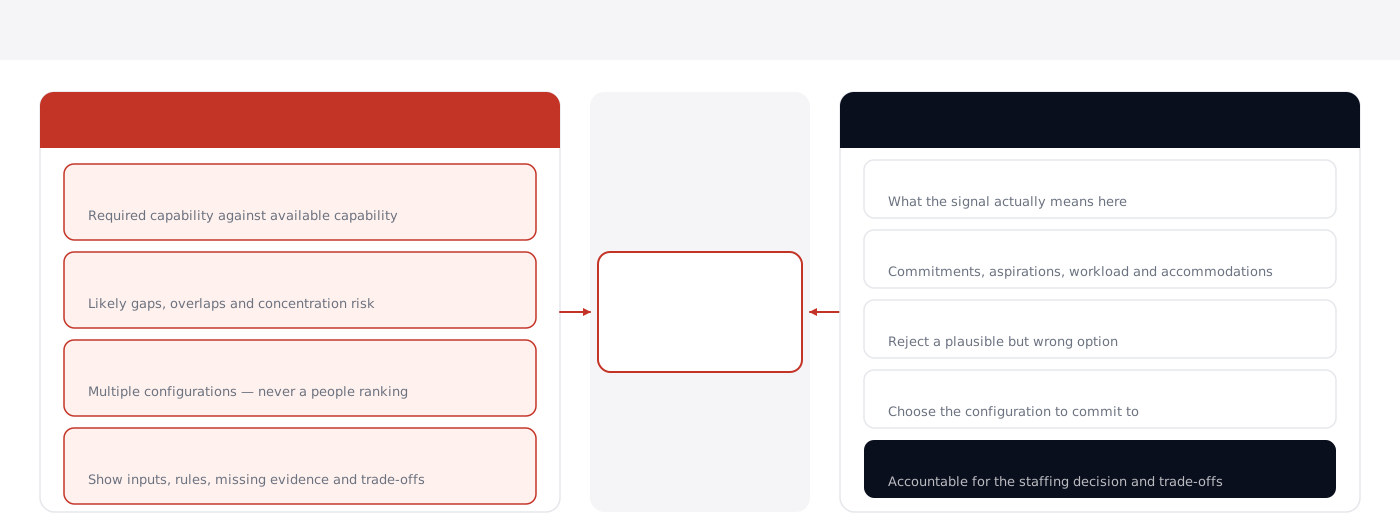
Recommendation contract
- Show evidence recency, coverage, and missing data.
- Offer multiple configurations with explicit trade-offs.
- Rank configurations—never people; exclude protected attributes.
- Let the manager adjust, reject, or request another option.
- Require approval before any staffing action.
- Log the recommendation, evidence snapshot, approval, and override.
Flow 03 — Close a critical gap
Product evidence
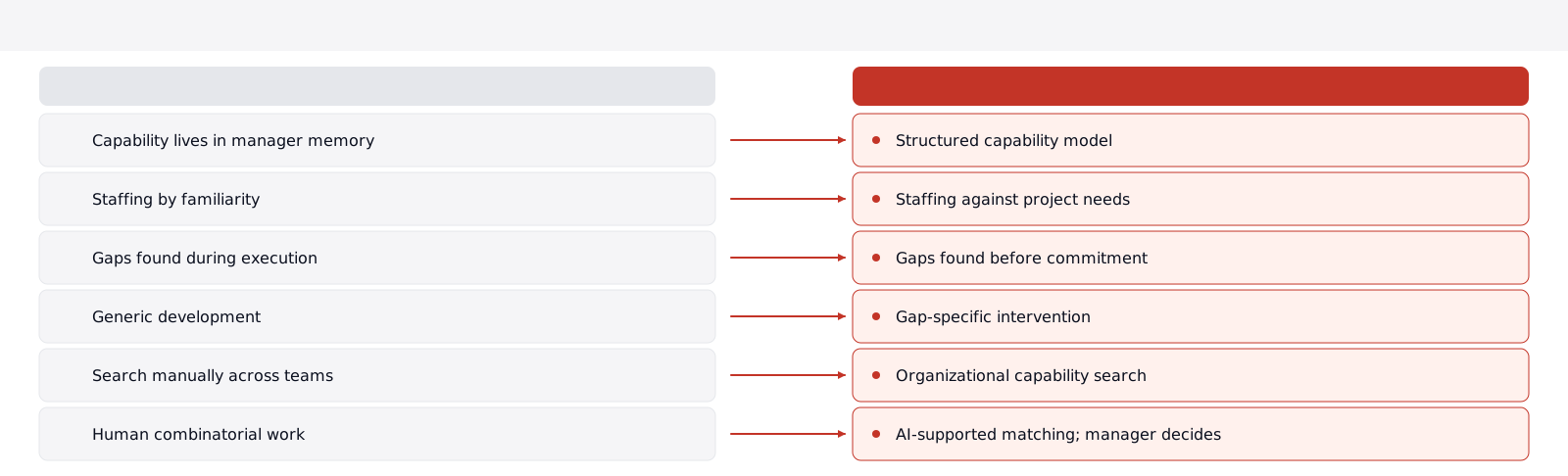
Managers staffed projects from familiarity and titles, discovering capability gaps after work began.
Design responseMove capability assessment upstream into project formation.
- 1. Critical gaps Missing capability surfaces before delivery is underway.
- 2. Coverage Required skills compared with available capability.
- 3. Remaining risk Exposure stays visible, not buried in detail.
- 4. Intervention path Mentoring and support sit next to the signal.
Raw assessment data is useless as a management interface.
Design responseTranslate individual data into team-level decision signals.
- 1. Team readiness Coverage against targets, not employee ranks.
- 2. Gap concentration Highest-severity exposures rise first.
- 3. Shape & movement Patterns over time, not a static heatmap.
- 4. Priority list Drill-down when needed — not by default.
“You need professional development” is too vague to act on.
Design responseCompare capability to level expectations and upcoming work.
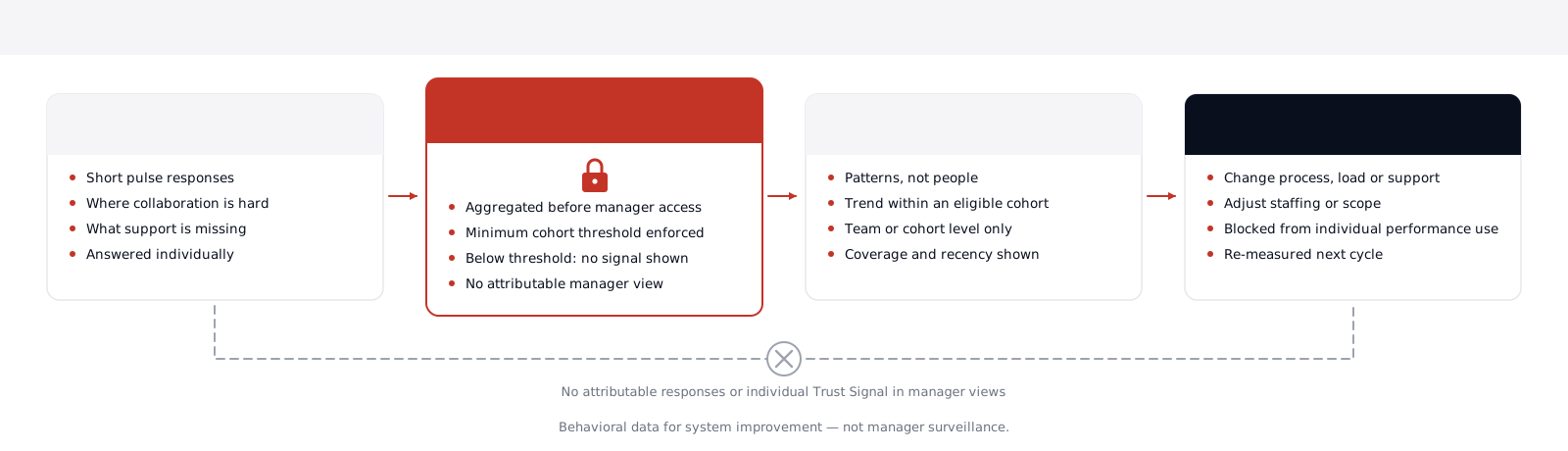
Privacy boundary: the Trust Signal shown in Member 360 belongs to the member’s self-view. Manager views receive only privacy-eligible team or cohort aggregates; they do not expose attributable responses or an individual Trust Signal.
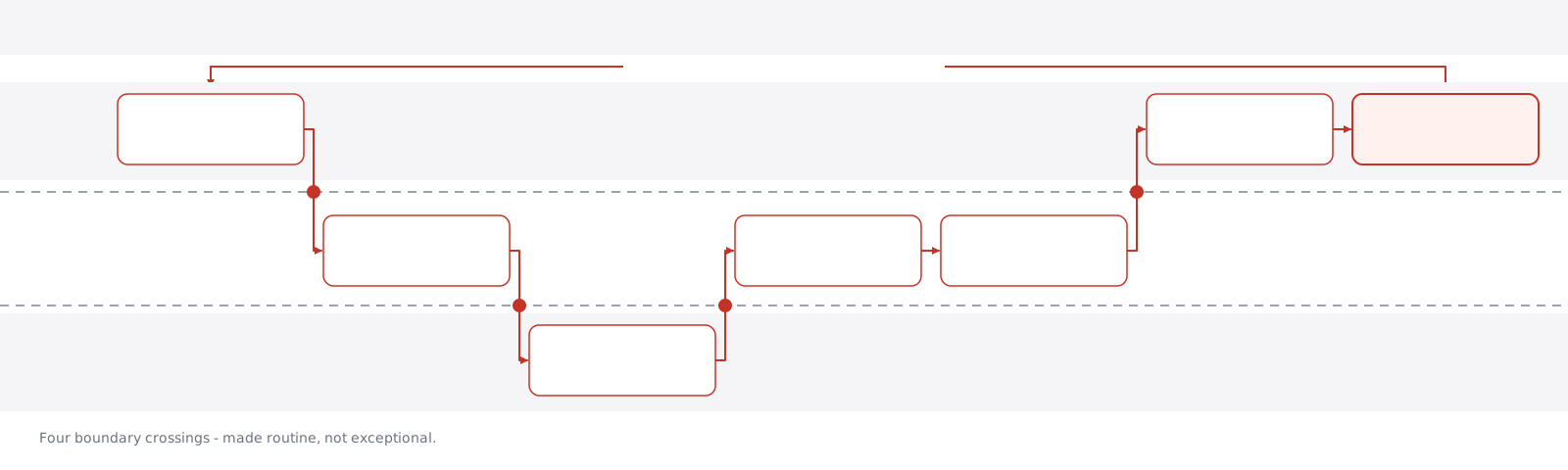
A capability gap often dead-ends in a dashboard.
Design responseMake intervention part of the workflow.
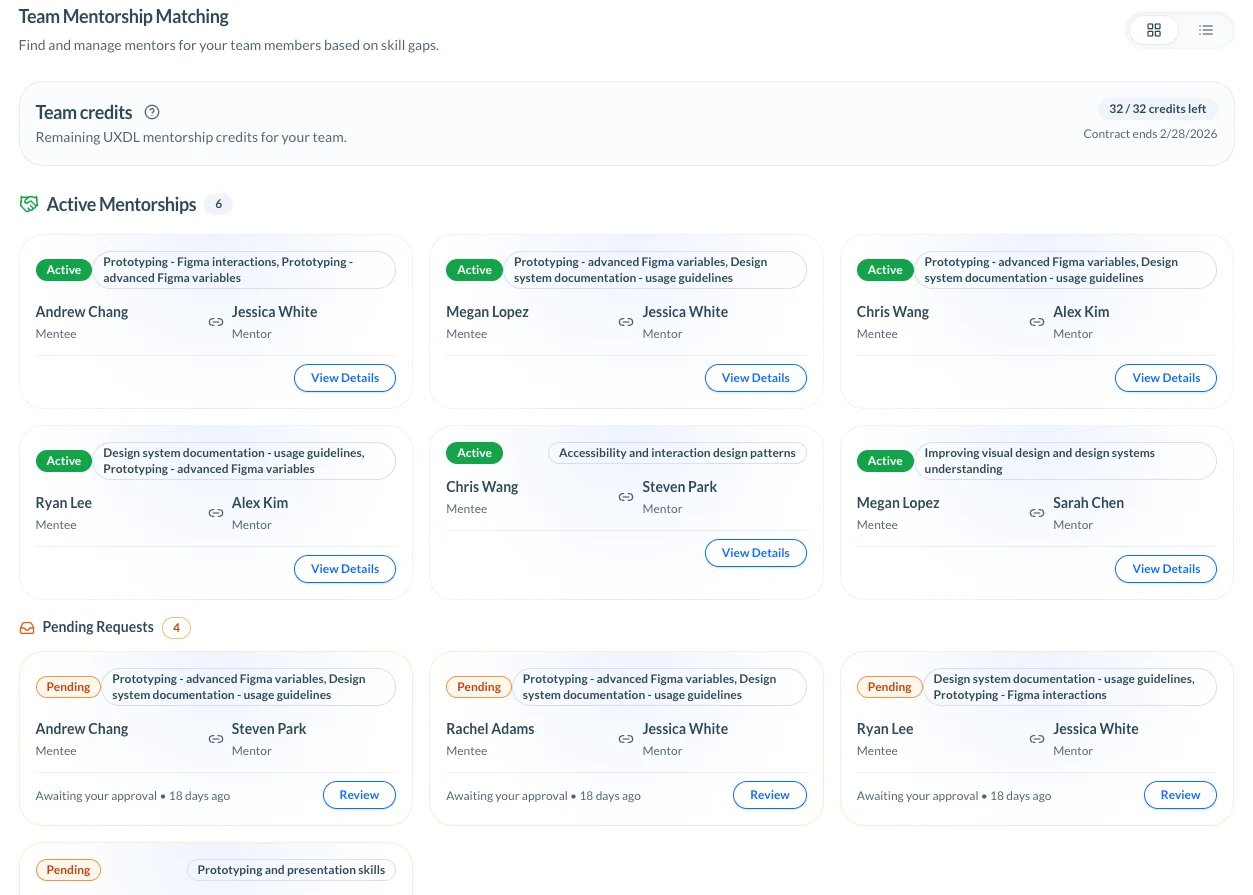
Human-centered AI
Trust Signal: a non-negotiable design constraint
I designed the Trust Signal around a non-negotiable constraint: sensitive behavioral data could not become manager surveillance. Aggregation, participation thresholds, and systemic rather than individual response are design requirements for that boundary.
From prototype to working product

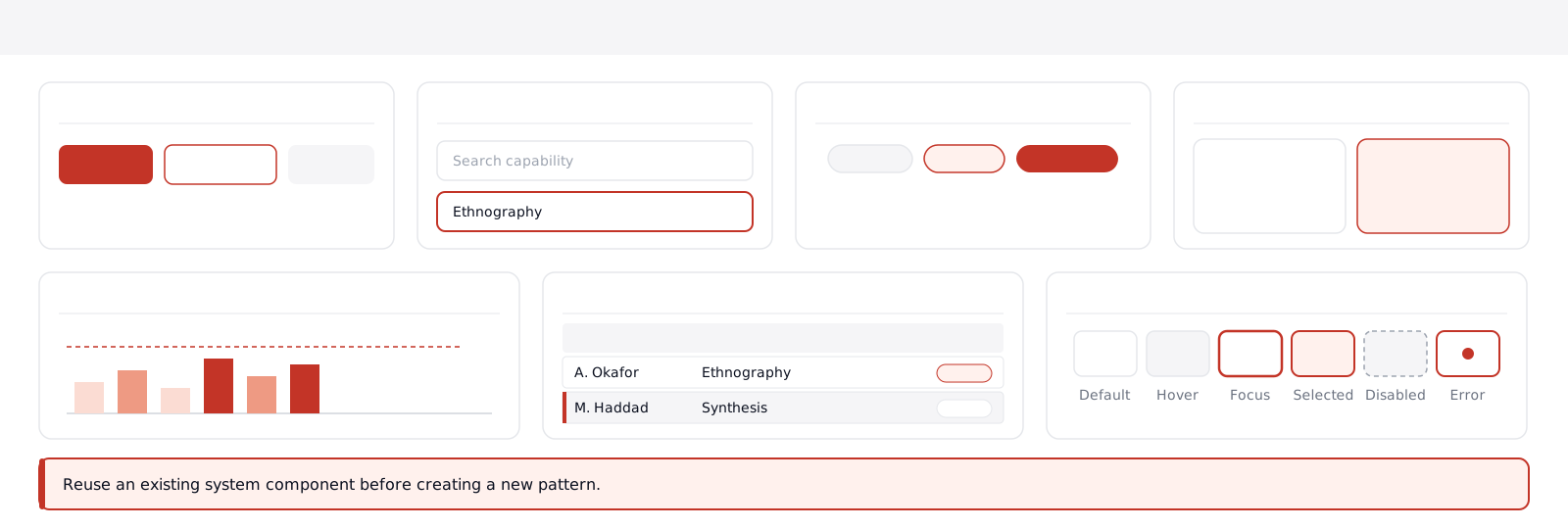
Design system as execution guardrail
Validate — Iterate
Validate
What evidence changed
The observations below combine interview synthesis, alpha-pilot use, diary feedback, and manual workflow evidence. Sources overlap, so they are presented as cumulative product evidence rather than isolated experiment results.
| Observation | Design change |
|---|---|
| Capability needed organizational level context. | Configurable levels and expectations by role maturity. |
| Managers decided from team patterns, not individual ratings. | Emphasized coverage, gaps, and concentration. |
| Capability mattered most when staffing upcoming work. | Required capabilities and staffing entered the core model. |
| Expertise existed but stayed invisible across teams. | Organizational search for support and mentoring. |
| Manual combination-matching became the bottleneck. | AI recommends configurations; managers keep control. |
Before / after — operating models
Outcome
From personal workaround to a validated problem and testable beta product
Real alpha usage included managers, participants, diary feedback, and iteration.
What I will not claim yet
TCE is still in beta. I do not claim reduced project failure, retention lift, or ROI that has not been measured. Evidence today: the problem exists, managers recognize it, capability can expose actionable patterns, gaps can connect to support, requirements can be compared with capability, AI can reduce combinatorial staffing work, and organizations agreed to keep testing.
What I learned
Never just a dashboard
Useful when people → work → risk → action → development → future capability.
Manual work as prototype
Forms answered first: is this information actually useful?
AI for combinatorial search
Machines can search configurations. Humans own judgment, context, and accountability.
Failure improved the product
The discarded build forced architecture, design-system governance, and AI constraints.
Next validation questions
| # | Question |
|---|---|
| 01 | Do capability-informed staffing decisions reduce late discovery of project risk? |
| 02 | Do AI-assisted recommendations improve capability coverage vs. manager-only staffing? |
| 03 | Does targeted mentoring measurably close identified capability gaps? |
| 04 | Can the system improve decisions without creating surveillance, bias, or false precision? |
I started with a recurring leadership problem, validated it manually, turned evidence into a product model, designed and built the system, put it into real teams, and let the results change the product.
The question TCE is designed to answer remains simple: Do we have the team capability required to deliver what we are about to promise?
A New Course for Waterway Logistics
Read case study →
Designing a Governed Knowledge Layer for AI
Read case study →Transforming Project Delivery with AI
Read case study →
An Enterprise Design System for Global Scale
Read case study →
A Unified Digital Ecosystem
Read case study →
A Lifeline for the IVF Journey
Read case study →
An Accessibility Program Built to Scale
Read case study →